Case · remote monitoring of Abbott implanted cardiac devices
Highly reliable remote data
transmission for pacemakers
In Abbott's Merlin@home™ remote monitoring system, implanted pacemakers and ICDs communicate automatically every day over RF telemetry with the Merlin@home™ gateway at home (Abbott calls it a transmitter); the MF833V data card plugged into the gateway reliably carries the data over 4G to Merlin.net™ and the clinic. No patient action is needed. Since 2017, more than 1.3 million of these cards have been deployed in 60+ countries and regions.
How it works
The whole chain needs no patient action: the implant monitors continuously, the bedside gateway reads it daily over RF telemetry, the data card sends it over 4G, and the clinician reviews it remotely. Click a step below, or let it play.
How it works: the device compares sensed events (VS) on the near-field channel with the far-field “discrimination” channel. Noise from a lead fracture appears on the near-field channel only, with no match on the far field; the device then classifies it as noise and withholds therapy, avoiding an inappropriate shock. These intracardiac electrograms are among the data that remote monitoring sends to the clinician. Sources: Cardiocases, Abbott ICD SecureSense Programming Guide; Heart Rhythm studies, 2015 and 2017.
About modelsAbbott's implanted cardiac devices come in many models with different ways of connecting: RF-telemetry models are read by the bedside Merlin@home™ gateway, which connects through a cellular data card such as MF833V or other means; newer Bluetooth-enabled models can talk directly to an Abbott app on the patient's phone, and patients without a compatible phone receive a mobile transmitter from Abbott. The remote monitoring flow is similar across models: continuous monitoring, data read-out, encrypted upload, clinician review and alerts. This page shows the Merlin@home gateway with the MF833V data card.
Why a cellular data card
Early Merlin@home units could only transmit over a landline; as more homes gave up their landlines, cellular networks became the key to taking remote monitoring worldwide.
2010 the USB cellular adapter arrives
St. Jude Medical introduced a USB cellular adapter for Merlin@home: a small device plugged into new and existing transmitters, letting patients send data over cellular networks instead of a landline.
The USB cellular adapter extends the global reach of the Merlin.net patient care network to new markets, especially those that rely heavily on cellular communication.Eric S. Fain, MD, President of the Cardiac Rhythm Management Division, St. Jude Medical, CE Mark press release, February 2010 (paraphrased)
From 2017 we took over this link
Abbott completed its acquisition of St. Jude Medical in January 2017, bringing Merlin@home and Merlin.net into Abbott. From that year, MF833V has been deployed worldwide as the USB cellular data card plugged into the gateway: more than 1.3 million units in 60+ countries and regions, with only a few dozen reported faulty.
Global bands and certification in 30 markets are what let one card serve 60+ countries and regions.Hyper Nexus
Milestones
Remote monitoring has gone from an optional service to the standard of care for patients with cardiac implants.
St. Jude Medical launches the Merlin@home™ RF wireless transmitter for remote monitoring of implanted cardiac devices.
The USB cellular adapter receives the CE Mark in Europe; Merlin@home can transmit over cellular networks.
The wireless USB adapter launches in the US; Merlin.net™ becomes the first medical device data network certified to ISO/IEC 27001 for information security.
Merlin.net™ 5.0 introduces Mobile DirectAlerts™, pushing alerts straight to physicians' phones.
JACC publishes the study of 269,000 patients; the Heart Rhythm Society (HRS) expert consensus recommends remote monitoring as the standard of care for cardiac implant patients.
Abbott completes its acquisition of St. Jude Medical; MF833V begins worldwide deployment as the USB cellular data card.
More than 1.3 million MF833V units deployed in 60+ countries and regions, with a reported failure rate below 0.01%.
What remote monitoring delivers
The findings below concern remote monitoring as a whole and come from peer-reviewed journals and professional societies; they show why this data channel matters, not the medical effect of any single connected component.
Lower risk of death
A study of 269,471 US patients implanted with a pacemaker, ICD or CRT device in 2008–2011 found that patients highly adherent to remote monitoring had a 58% lower risk of death than non-users, and about 2.4 times the likelihood of survival.
Varma N et al., J Am Coll Cardiol 2015;65:2601–2610; St. Jude Medical press release (8 May 2014). Some authors are St. Jude Medical employees.The more it is used the greater the benefit
An accompanying editorial noted that more than half of patients with remote-monitoring-capable devices never activated it; the survival advantage grew with use, and pacemaker patients benefited as much as defibrillator patients.
Freeman JV, Saxon LA,J Am Coll Cardiol 2015;65:2611–2613。Now the standard of care
The 2015 HRS expert consensus: remote monitoring should be offered to all patients with cardiac implants, combined with at least one in-person evaluation a year. HRS reaffirmed the consensus in 2020.
Slotwiner D et al., Heart Rhythm 2015;12:e69–e100.Why this link runs on MF833V
Remote monitoring runs every day, so the data card has to work reliably in any country, on any network.
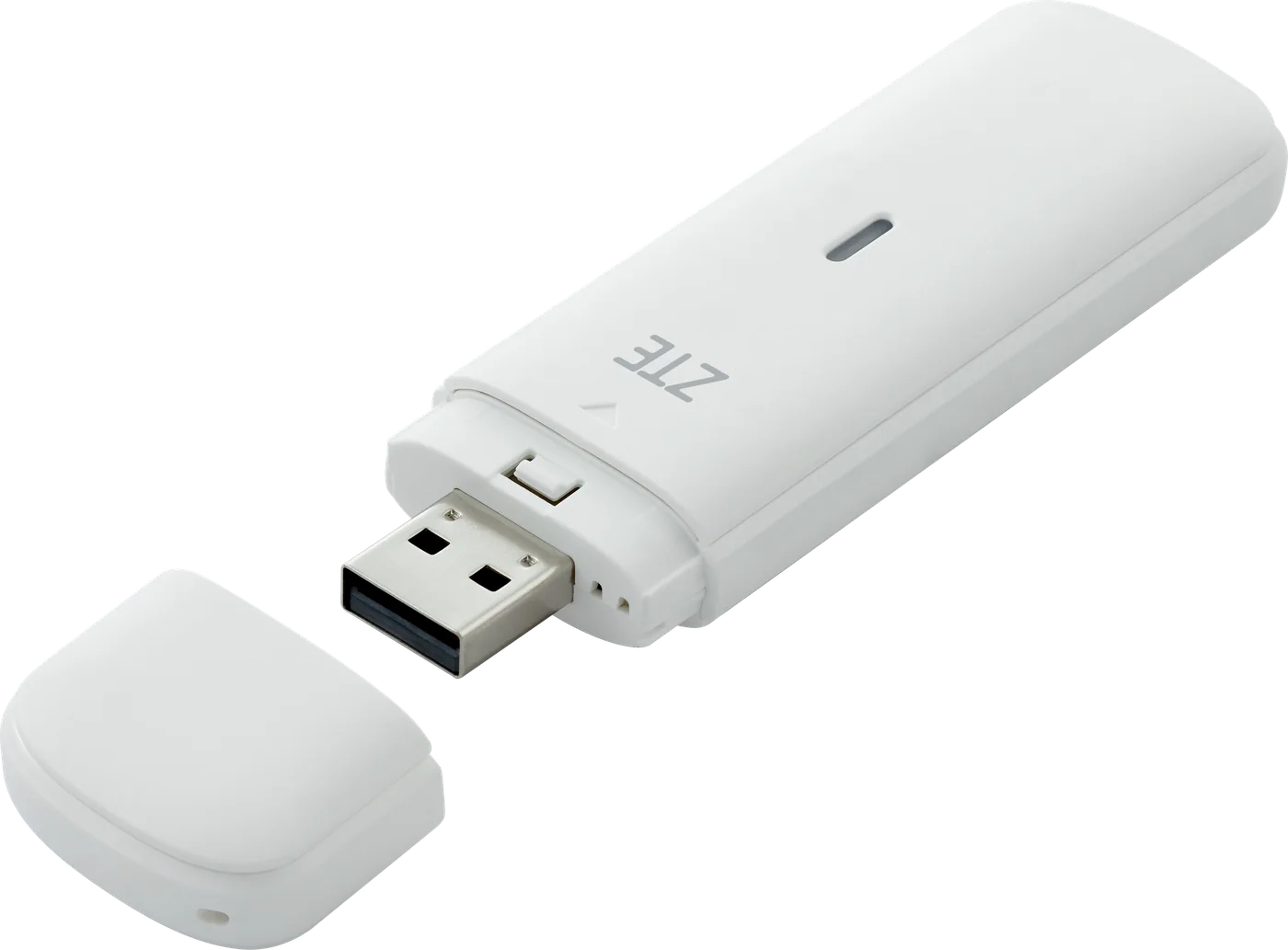
A global data card proven over ten years
Plug and play: plugged into the Merlin@home gateway, it goes online; global bands, 4G with fallback to 3G and 2G.
- DeployedMore than 1.3 million (since 2017)
- Coverage60+ countries and regions
- Reported faultsOnly a few dozen, under 0.01%
- Certification30 markets, incl. FCC, PTCRB, CE, KC, Japan Giteki
References
- Abbott:Connectivity & Remote Care(Merlin@home for RF models; Bluetooth models with a phone app, and a mobile transmitter if the patient has no compatible phone);About the Merlin@home Transmitter(EX1150 and EX1150W use RF telemetry).
- Abbott:Merlin@home Transmitter;Setting up the Merlin@home Transmitter(connection: analogue phone line, cellular adapter or wireless broadband).
- St. Jude Medical: US launch press release for the Wireless USB Adaptor for Merlin@home, 10 May 2010 (Business Wire / CNBC); CE Mark press release, February 2010 (HHM Global)。
- Merlin@home launched in 2008: Medgadget; Merlin.net 5.0 and Mobile DirectAlerts: MobiHealthNews。
- Abbott completes acquisition of St. Jude Medical, 4 January 2017: SEC 8-K。
- Varma N, Piccini JP, Snell J et al. The Relationship Between Level of Adherence to Automatic Wireless Remote Monitoring and Survival in Pacemaker and Defibrillator Patients. J Am Coll Cardiol 2015;65:2601–2610 (PubMed)。
- Freeman JV, Saxon LA. Remote Monitoring and Outcomes in Pacemaker and Defibrillator Patients: Big Data Saving Lives? J Am Coll Cardiol 2015;65:2611–2613(JACC)。
- Slotwiner D et al. HRS Expert Consensus Statement on Remote Interrogation and Monitoring for CIEDs. Heart Rhythm 2015;12:e69–e100 (HRS)。
Abbott, Merlin@home™, Merlin.net™ and DirectAlerts™ are trademarks of the Abbott group of companies. Deployment numbers, coverage and fault data come from Hyper Nexus; annual new-patient figures are business data provided by Hyper Nexus. The research findings concern remote monitoring as a whole, are observational associations, and do not imply any medical effect of MF833V.